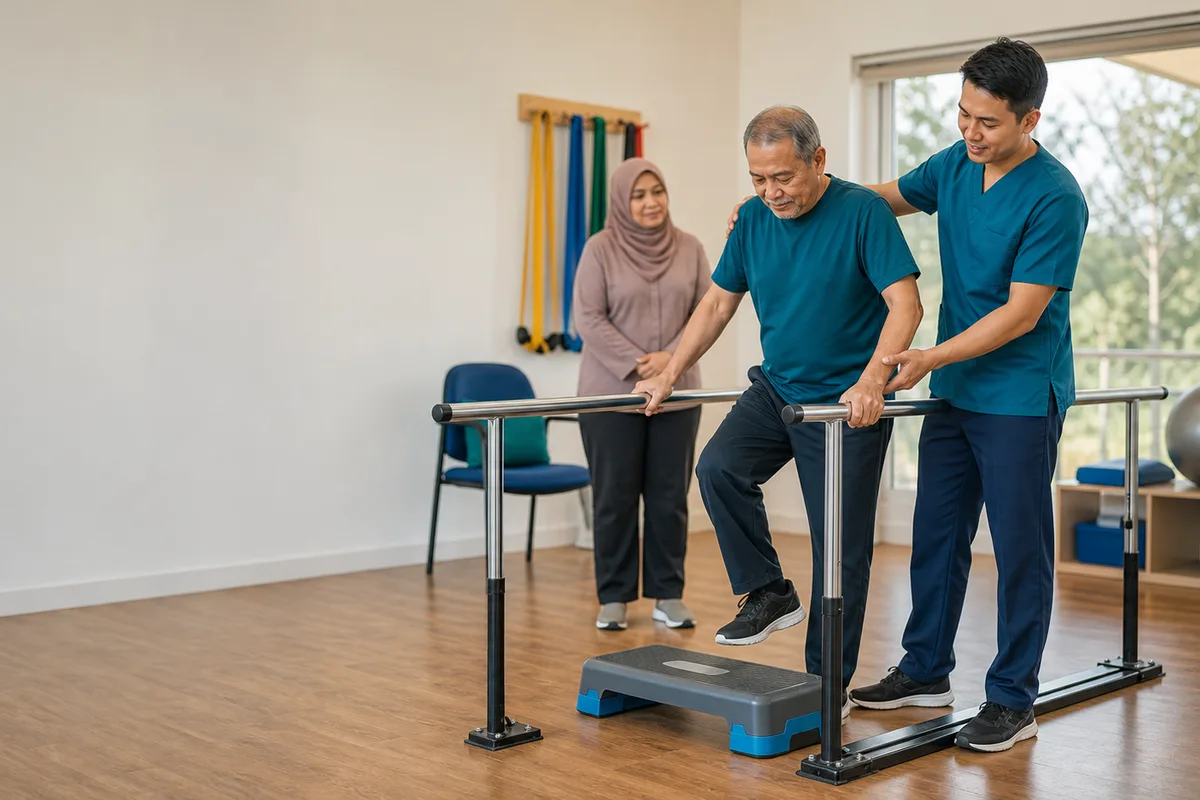
Post-Hip Replacement Physiotherapy in Johor
Total hip replacement is one of the most successful elective operations in medicine, but the outcome you walk home with in year 10 is shaped heavily by what happens in the first six weeks.
Rehab starts on the day of surgery in most hospitals - the physio in the ward gets you up within 24–48 hours - and continues through an outpatient or home programme for another 10–12 weeks.
Anterior vs posterior approach - the plan is not the same
Your surgical approach changes what we can safely do and when.
Posterior-approach patients typically have precautions for 6 weeks: no hip flexion past 90°, no crossing legs, no internal rotation - so no squatting to pick something off the floor, no sitting on a low sofa, no putting on socks the normal way.
Anterior-approach patients often have fewer restrictions and can progress faster, but the surgical trauma to hip flexors means we manage that differently.
What the weeks look like
Weeks 0–2: ward and early home - getting up, bed transfers, walking with a frame or crutches, scar care, ankle pumps for DVT prevention. Weeks 2–6: weight-bearing normalisation, progression off crutches, gentle strengthening of glutes and quadriceps without breaking precautions. Weeks 6–12: precautions relaxed (surgeon's call), deeper strengthening, balance and stairs, return to driving (around week 6 for right-side replacements). Month 3–6: longer-term strength, gait quality, return to golf, hiking, or whichever activity was the reason for surgery.
Cost and timeline
RM120-250 per session. Typical course: 12–20 outpatient sessions over 12–16 weeks. Patients living far from the clinic often mix 4–6 home-visit sessions for the first fortnight with outpatient thereafter.
Red flags post-op
- Sudden onset calf pain or swelling (DVT - A&E).
- A "pop" from the hip followed by inability to weight bear (possible dislocation - A&E).
- Fever plus wound redness (possible infection).
- Progressive loss of range, not improvement.
Johor context
We receive post-hip replacement referrals from Gleneagles Medini, Regency Specialist, Columbia Asia Iskandar, KPJ Johor, and HSA Sultanah Aminah's orthopaedic team.
Every surgeon has their own precautions - we call or WhatsApp their clinic directly before the first session rather than guessing.
How PhysioJohor matches you
WhatsApp us: surgeon name, hospital, date of surgery, approach (anterior or posterior if known), and whether outpatient clinic or home visit suits you better.