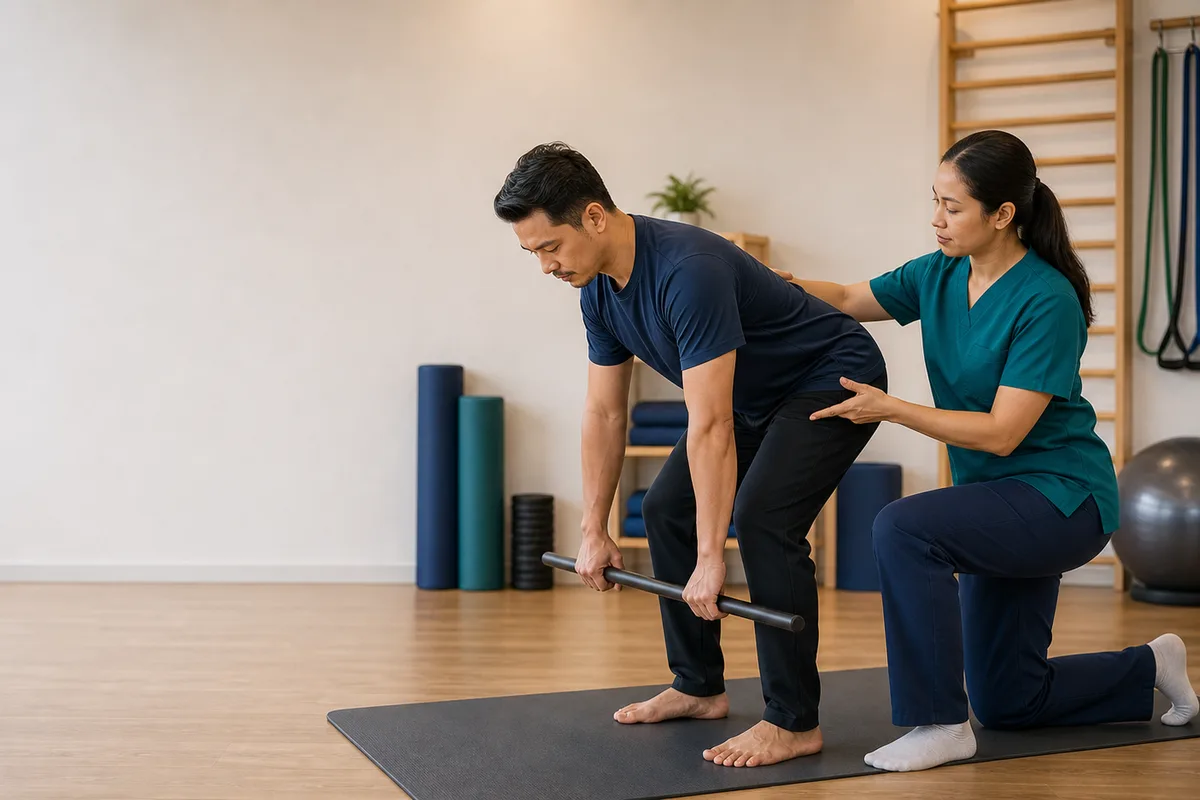
Exercise Therapy in Johor
Exercise therapy is the single intervention with the strongest evidence across almost every condition a physio treats - low back pain, tendinopathies, post-surgical rehab, osteoarthritis, stroke recovery, falls prevention in the elderly.
When an internet article claims a passive modality is "the cure", check what it's being compared to.
In head-to-head trials, structured exercise wins more often than not.
How physio-prescribed exercise differs from gym workouts
A gym programme trains for general fitness. Exercise therapy is prescriptive.
It answers four specific questions: which tissue needs loading, in what direction, at what dose, and against what progression criteria.
A badly-prescribed loading programme can flare a tendinopathy as effectively as complete rest. A well-prescribed one resolves it.
The difference is diagnostic accuracy and dosing precision - both of which are what you pay a physio for.
Dose and progression are the two things most people get wrong
Too little load and nothing changes. Too much and the tissue flares.
The useful frame is: what is the minimum effective dose, and what's the criterion to progress?
For Achilles tendinopathy this might be "3 × 15 slow heel raises, progress weight when you can do the set without next-day morning pain".
For post-ACL rehab, "return to running when single-leg hop is 90% of the other side".
Specific criteria replace guesswork.
What a session with us looks like
Assessment, movement screen, and strength baseline tests relevant to your condition.
Prescription of a small number of high-value exercises, each taught in detail - position, tempo, breathing, what symptoms are acceptable during and after.
Return visits check progression, advance load, and troubleshoot. Most of the work happens between visits, at home or in your gym.
Cost and Johor context
RM120-250 per session depending on clinic tier.
Typical course: 4–12 sessions over 4–16 weeks, with home practice 3–5 times a week.
We prescribe around Johor realities - gym access at Medini or Iskandar Puteri, minimal-equipment home programmes for the pantang period, outdoor work for runners at Legoland Merlin and Iskandar Waterfront, pickleball-specific progressions for the new wave of Johor paddle sports players.
How PhysioJohor matches you
WhatsApp us: your diagnosis (or symptoms if undiagnosed), what equipment you have access to, and how many days a week you can realistically train.
Reviewed by M. Thurairaj, registered physiotherapist.